
Fabric softener is one of those laundry products that can easily become part of the routine without us ever stopping to ask what it actually does.
Detergent goes in. Fabric softener goes in. Then the wash starts.
But do you really need fabric softener every time?
Not necessarily.
Fabric softener can make certain fabrics feel smoother, reduce static and add fragrance, but it doesn’t do the cleaning. And for some things we wash regularly, that softer finish may come with a trade-off.
The easiest way to think about it is not “Is fabric softener good or bad?” but:
What am I washing, and what do I need that fabric to do?
That one question makes the decision much simpler.
What Does Fabric Softener Actually Do?
Detergent and fabric softener have different jobs.
Detergent is there to help remove dirt, oils and other residue during the wash.
Fabric softener is generally added during the rinse stage. Many liquid fabric softeners contain conditioning ingredients that settle onto the surface of fabric fibers and reduce friction between them. That is part of what gives clothes a smoother, softer feel.
Depending on the product, fabric softener may also help:
- reduce static
- add fragrance
- make some fabrics feel smoother after drying
- reduce the rough feeling certain clothes can develop over time
Those can all be useful benefits.
But there is one distinction worth remembering:
Soft laundry and clean laundry are not the same thing.
Detergent does the cleaning. Fabric softener changes the finish.
Once I understood that difference, it became much easier to decide when I actually wanted to use it.
1. Towels Don’t Always Benefit From Fabric Softener
Towels are a good example of why softer isn’t automatically better.
We want them to feel comfortable, but their main job is to absorb water.
Some common fabric-softening ingredients can make the surface of fibers more water-repellent, which may reduce how easily treated fabrics take up water again. Textile references describe this as reduced rewetting performance.
That doesn’t mean using fabric softener once will suddenly ruin your towels.
But if you use it regularly and your towels have started feeling less absorbent or strangely coated, it may be worth leaving it out for a few washes and seeing what changes.
I would pay attention to how the towels actually perform rather than whether they feel extra soft when they come out of the laundry.
Do they absorb water well?
Do they still feel fresh when damp?
Do they seem heavy or coated?
If your towels also develop a musty smell after washing, I covered several possible causes in Why Do Towels Smell After Washing?.
2. Check Before Using It on Sportswear
This is one area where reading the care label really matters.
Many modern sports fabrics are designed to move moisture away from your skin. Some manufacturers specifically advise against using fabric softener on moisture-wicking garments because residue on the fibers can interfere with the way the fabric manages moisture. Nike, for example, gives this advice for its Dri-FIT and other synthetic performance clothing.
That can include things like:
- running tops
- sports bras
- leggings
- gym shirts
- other moisture-wicking clothing
You don’t need to memorize which fabrics are safe and which aren’t.
If something is designed to wick sweat, repel water or perform another technical function, check the garment’s care label first.
That is more reliable than applying one laundry rule to everything you own.
3. Microfiber Cleaning Cloths Are Better Kept Simple
I would also skip fabric softener when washing microfiber cleaning cloths.
Microfiber cleaning products rely on very fine fibers to pick up dust, moisture and grime. Fabric softener can leave residue on those fibers, which may make the cloth less effective at doing the job it was designed for.
This is one of those cases where a simpler wash routine makes more sense.
Wash the cloth for what it needs to do rather than trying to make it feel softer.
The same general principle applies to a lot of laundry:
Don’t improve one quality of a fabric at the expense of the reason you bought it.
4. Special Fabrics Deserve a Quick Look at the Label
Rather than keeping a long mental list of fabrics that should or shouldn’t get softener, I find this rule much easier:
If the item has a special function, check the care label.
That includes clothing designed to:
- wick moisture
- repel water
- provide insulation
- stretch in a particular way
- meet a specific performance standard
Care labels are easy to ignore when we are doing a normal load of laundry, but they are often the best source of information for that particular garment.
So When Does Fabric Softener Make Sense?
There are still plenty of reasons someone might choose to use it.
Maybe:
- your clothes feel noticeably rough after air drying
- static is a recurring problem
- you enjoy the fragrance
- you prefer how certain everyday fabrics feel with it
There is nothing wrong with using a product because you like the result.
The important part is recognizing that it is optional, not a required step in every load.
For ordinary clothes where absorbency or technical performance isn’t important, using fabric softener according to the product directions may be perfectly reasonable.
Do You Need It in Every Wash?
Probably not.
This is the biggest change I made in how I think about fabric softener.
I used to treat it as part of the washing process itself.
Now I think of it as a finishing product.
That makes the decision much easier.
For example:
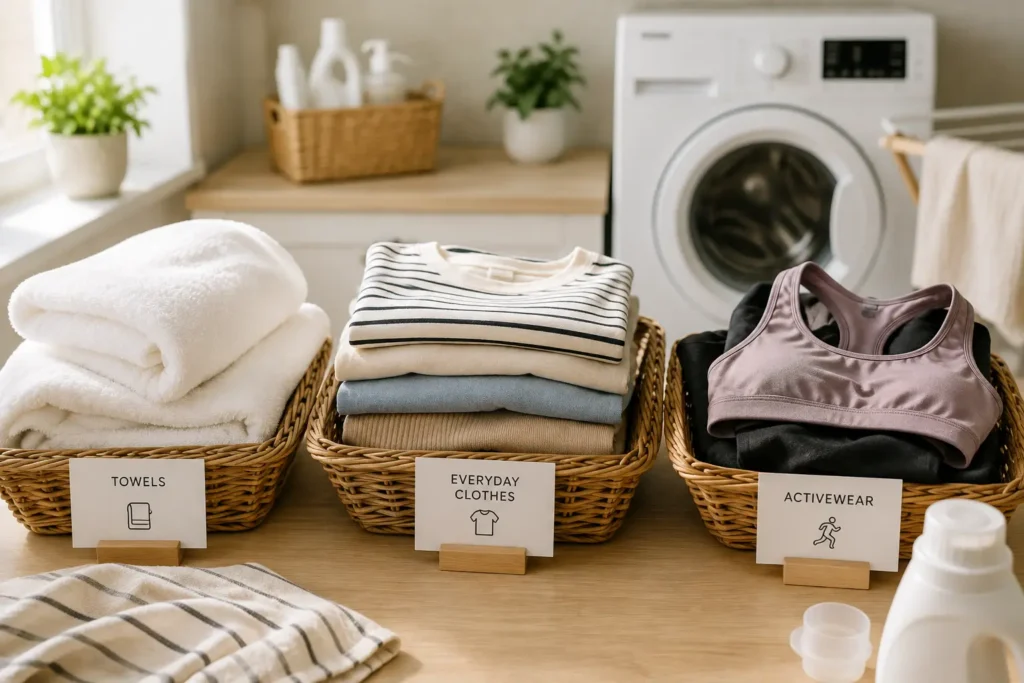
Towels: usually skip it.
Microfiber cloths: skip it.
Sportswear: check the care label.
Everyday clothes: use it if you like the result.
That feels much more practical than using the same combination of laundry products for every load.
What Happens If You Stop Using Fabric Softener?
Your clothes will still be washed.
The biggest difference may simply be how some fabrics feel after drying.
You might notice:
- slightly more static
- clothes feeling a little firmer after air drying
- less fragrance
- towels feeling different or more absorbent
The result depends on the fabric, how you dry your clothes and the way you normally do laundry.
You also don’t need to make it a permanent experiment.
If you have used fabric softener for years, try leaving it out for a few loads and see what you actually notice.
That tells you much more about whether you need it than following a blanket rule online.
What If You Mainly Use It for the Fragrance?
For a lot of people, this is probably the real reason.
Fresh laundry smells nice. I understand the appeal.
But I’ve started separating fragrance from cleanliness in my own laundry routine.
A strong scent can make clothes feel freshly washed, but it doesn’t tell me whether they rinsed properly, dried properly or still perform the way they should.
That doesn’t mean fragrance is bad.
It just means I no longer use scent as the test for whether laundry is clean.
Sometimes I want that extra fragrance.
Sometimes I don’t.
You Can Also Just Use It Less Often
Fabric softener doesn’t have to be an all-or-nothing decision.
If you like it, you can simply be more selective.
For example:
- use it for regular clothing when you want a softer finish
- leave it out of towel loads
- skip it for microfiber cloths
- follow the care label for sportswear and technical garments
That is probably the most realistic approach for many households.
You keep the part of the product you enjoy without automatically adding it to every wash.
Final Thoughts
You don’t need fabric softener to get your laundry clean.
Its main role is to change the way fabric feels, reduce static and, in many products, add fragrance.
For everyday clothing, using it may simply come down to preference.
For towels, microfiber cloths and some technical sports fabrics, skipping it can make more sense.
Instead of automatically adding it to every wash, look at what is actually in the machine and what you need those fabrics to do afterward.
Sometimes fabric softener is useful.
Sometimes it is unnecessary.
Knowing the difference is more helpful than following the same laundry routine every time.
Sources & Further Reading
- Li, Y. et al. — Water hardness effect on the association and adsorption of cationic cellulose derivative/anionic surfactant mixtures for fabric softener application. Colloids and Surfaces A, 2021. Explains how fabric-softening ingredients adsorb onto fibers and reduce friction. ScienceDirect study
- Schindler, W. D. & Hauser, P. J. — Chemical Finishing of Textiles: Softening Finishes. Discusses how common softeners affect fiber surfaces, softness and rewetting properties. ScienceDirect overview
- Nike — Care guidance for sports and moisture-wicking clothing. Advises avoiding fabric softener on certain synthetic performance fabrics because it can interfere with their intended moisture-management properties. Nike sportswear care guide
- Rubbermaid Commercial Products — Microfiber care guidance. Recommends avoiding fabric softener when laundering microfiber because it can reduce cleaning performance. Rubbermaid microfiber care information