
There’s nothing more frustrating than washing a load of clothes only to realize they still don’t smell completely clean.
Sometimes the odor is noticeable as soon as the cycle ends. Other times, the clothes seem perfectly fine when they are dry but start smelling again once you wear them.
If that keeps happening, the problem isn’t always that your detergent is too weak.
Sweat, body oils, damp laundry, an overloaded machine and even the washing machine itself can all make odors harder to remove. The type of fabric can matter too, especially with workout clothes and other synthetic materials.
Here’s where I would look first.
1. The Odor May Still Be Trapped in the Fabric
Clothes collect much more than visible dirt throughout the day.
Sweat, skin oils and other residue can build up in areas that sit close to the body, especially around underarms, collars and waistbands.
If those substances aren’t removed effectively during washing, some odor can remain in the fabric.
This tends to be especially noticeable with clothes such as:
- workout tops
- sports bras
- synthetic T-shirts
- leggings
- socks
Polyester and other synthetic fabrics can also behave differently from cotton when it comes to odor. Research into textile odor has found that fiber type can affect how odor-related compounds and bacteria interact with clothing.
That doesn’t mean synthetic clothing is dirty or that you should avoid it. Performance fabrics have plenty of useful qualities, including being lightweight and quick-drying.
It simply helps explain why a heavily worn synthetic gym top may hold onto odor differently from an everyday cotton T-shirt.
For clothes that have been worn close to the body, turning them inside out before washing can also help expose the areas that have had the most contact with sweat and skin.
2. Sweaty Clothes Are Sitting Damp for Too Long
Sometimes the problem starts hours before the washing machine is turned on.
A sweaty gym shirt rolled up inside a bag or buried at the bottom of a laundry basket stays warm and damp with very little airflow.
The longer it sits that way, the more stubborn the odor can become.
If you aren’t washing sweaty clothes straight away, try letting them air out first.
The same goes for:
- swimwear
- damp socks
- wet exercise clothes
- anything that is noticeably moist after use
You don’t need a complicated system.
The goal is simply to avoid leaving damp fabric crumpled in a pile for long periods.
3. The Washing Machine Is Too Full
It’s tempting to fit as much as possible into one load, especially when the laundry basket is overflowing.
But clothes need room to move during the wash.
When the drum is packed too tightly, water and detergent may not circulate through the load as effectively, making it harder to remove sweat, oils and everyday soil.
This can become particularly noticeable with heavily worn clothes.
If a full load of gym clothes, socks and everyday laundry regularly comes out less fresh than expected, try washing a slightly smaller load before changing detergents or adding another laundry product.
Sometimes the machine simply needs more room to do its job.
4. The Wash Cycle May Not Match the Laundry
A quick cycle can be useful for lightly worn clothes.
It may not always be enough for clothing that is sweaty, heavily worn or noticeably soiled.
The right cycle depends on:
- the fabric
- how dirty the clothes are
- the garment care instructions
- the detergent you are using
Instead of automatically choosing the same setting for every load, consider whether the clothes actually need a longer or more thorough wash.
Water temperature can matter too, but hotter isn’t automatically better.
Always check the care label first and use a temperature that is appropriate for the fabric.
The aim is not to wash everything as hot as possible. It is to choose a wash that is suitable for both the garment and the level of soil.
5. Clean Clothes Are Staying Wet After the Cycle
Even a properly washed load can start smelling unpleasant if it stays wet in the machine for too long.
Most of us have forgotten a load of washing at least once.
A few hours later, you open the door and that fresh-laundry smell has been replaced by something noticeably mustier.
If possible, remove clothes reasonably soon after the cycle finishes.
The same principle applies after they come out of the washer.
Make sure clothes are completely dry before:
- folding them
- putting them into drawers
- storing them in a wardrobe
- piling them together
If something still feels slightly damp, give it more time.
Putting clothes away before they are fully dry can undo a lot of the work you just did in the wash.
6. The Washing Machine Itself May Need Cleaning
If different types of laundry all seem to come out with the same stale smell, the clothes may not be the main problem.
Washing machines can collect detergent residue, lint, dirt and moisture in places that stay damp between loads.
Depending on the machine, areas worth checking may include:
- the rubber door seal
- detergent dispenser
- drum
- filter
- other cleaning points listed in the manufacturer’s instructions
Front-loading machines can be particularly prone to moisture sitting around the rubber gasket.
If the washing machine itself smells when you open the door, that is a useful clue.
Clean the machine according to the manufacturer’s instructions rather than using a random household cleaning mixture.
Allowing the machine to air out between washes, where practical and safe, can also help prevent moisture from sitting inside for long periods.
What Should You Do With Clothes That Already Smell?
If freshly washed clothes still smell, I wouldn’t start by covering the odor with more fragrance.
Instead, think about where the problem seems to be happening.
If it is mainly workout clothes, check the fabric, turn them inside out and make sure the washer isn’t overloaded.
If the whole load smells musty, think about whether the clothes sat wet after the cycle.
If the same odor appears in almost every load, inspect the washing machine.
And if you tend to use a generous amount of detergent, check the recommended dose before adding more.
Using extra detergent doesn’t necessarily mean cleaner clothes. I’ve covered that in more detail in my guide to how much laundry detergent to use.
The goal is to identify the most likely cause rather than changing five things at once.
If Only Certain Clothes Keep Smelling
Pay attention to the fabric.
A polyester workout top or synthetic uniform may behave differently from the cotton clothes in the same household.
Research into textile odor has found that fiber type can influence how odor compounds are retained and released, with measurable differences between polyester and cotton.
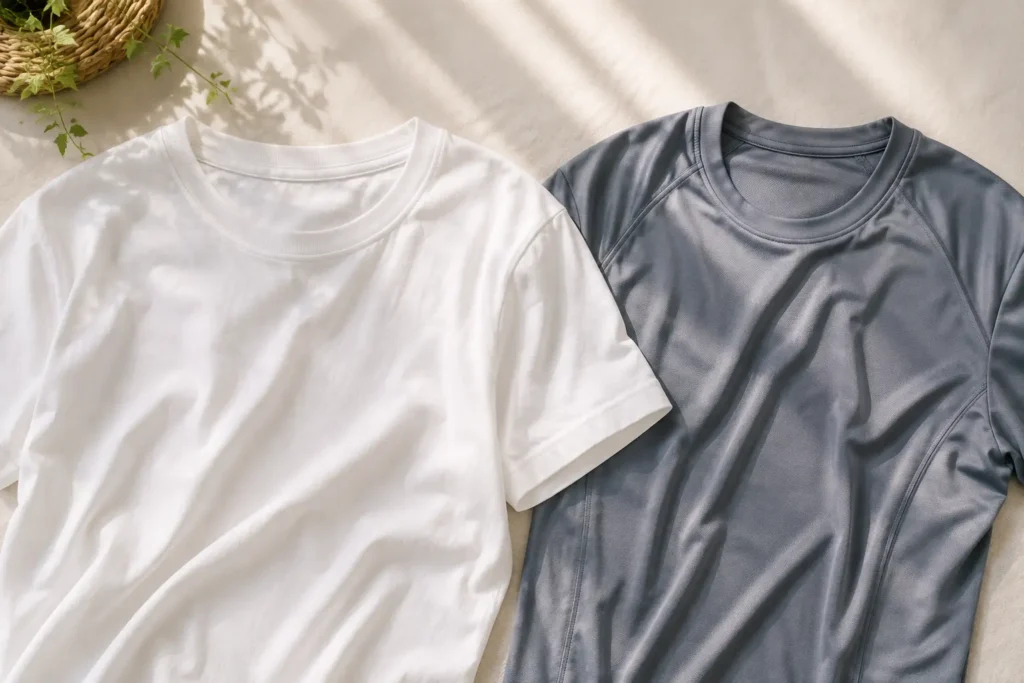
That means a washing routine that works perfectly well for everyday cotton clothing may not give exactly the same result with heavily worn synthetic sportswear.
Again, this isn’t a reason to avoid performance clothing.
Synthetic activewear is popular for good reasons. It can be lightweight, stretchy and quick-drying.
It simply means that a garment’s fabric, how heavily it was worn and how it was handled before washing can all affect the result.
Before reaching for more detergent, check the care label and think about:
- how long the garment sat before washing
- whether it was still damp
- how heavily it was worn
- whether it had enough room in the washer
- whether the wash cycle suited the fabric
Those details can often tell you more than the strength of the laundry fragrance.
Final Thoughts
If clothes still smell after washing, there usually isn’t one single explanation.
The odor may be coming from sweat and body oils remaining in the fabric, damp clothes sitting too long, an overloaded washer, a wash cycle that doesn’t suit the load or a washing machine that needs cleaning.
Start with the most likely cause rather than changing everything at once.
Let sweaty clothes air out if you can’t wash them straight away. Give the load enough room. Choose a cycle that suits the fabric and soil level. Remove clean laundry reasonably soon after washing and let it dry completely.
And if the same stale smell keeps appearing across very different loads, take a closer look at the washing machine itself.
A few simple adjustments are often more useful than adding another laundry product.
Sources & Further Reading
American Cleaning Institute — Laundering Problems & Solutions
Practical guidance on poor soil removal, washer overloading and wash temperature.
Whirlpool — How to Remove Tough, Stinky Odors From Clothes
Guidance on lingering clothing odors, sweaty or damp laundry and everyday washing habits.
McQueen et al. — Textile Sorption and Release of Odorous Volatile Organic Compounds From a Synthetic Sweat Solution
Research examining how odor-related compounds interact with different textile fibers.
Callewaert et al. — Microbial Odor Profile of Polyester and Cotton Clothes After a Fitness Session
Research comparing odor development in polyester and cotton clothing after exercise.